Key takeaways
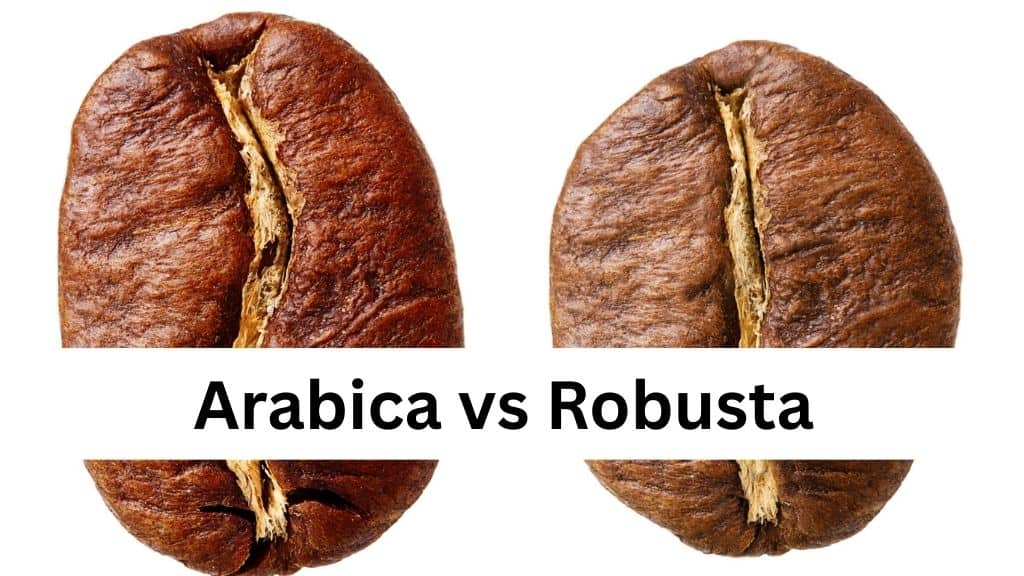
- Arabica often tastes smoother and more “sweet.” Robusta often tastes stronger and more bitter.
- Robusta usually has more caffeine than Arabica.
- Your brew method and tools matter as much as the bean.
If your coffee feels inconsistent, this guide will help you choose faster. You will waste fewer beans and get a cup you enjoy more.

Quick answer
Arabica is often smoother and more aromatic, while robusta is often bolder, more bitter, and higher in caffeine.
If you drink coffee black, start with arabica. If you add milk or want a stronger kick, try a blend with some robusta.
Safe starting water temp (hot brews): about 90–96°C (195–205°F).
What changes results most: bean freshness, roast level, grind size, water temperature, brew time, and your brewer.
Need a Few Simple Tools for Better Home Brewing?
Browse practical Amazon Basics coffee and kitchen gear for grinding, brewing, storing, and setting up your everyday coffee corner.
Paid link. As an Amazon Associate we earn from qualifying purchases.
Choose in 30 seconds
Pick the line that sounds like you.
- “I like smooth coffee.” → Arabica
- “I like strong coffee with milk.” → Blend with some robusta
- “I want more caffeine.” → Robusta or a robusta blend (then check your total intake)
- “I hate bitterness.” → Arabica, medium roast, and don’t brew too hot
- “I’m on a budget.” → Robusta blends can be good value, but brew carefully to avoid harsh taste
- “Busy mornings.” → AeroPress or moka pot, and consider a blend that still tastes good with speed
Want to estimate your daily caffeine total? Check out Caffeine Intake Calculator.
Arabica and robusta, defined
- Arabica: coffee from Coffea arabica. It often tastes sweeter and more complex.
- Robusta: coffee from Coffea canephora (often called robusta). It often tastes stronger and more bitter.
Aroma (smell you notice while brewing and sipping).
Body (how thick or light coffee feels in your mouth).
Which has more caffeine?
Measured ranges in a large review show this pattern in green beans (unroasted):
- Arabica: about 0.9–1.5% caffeine (dry weight)
- Robusta: about 1.2–2.4% caffeine (dry weight)
This is why robusta often feels more “stimulating,” even at similar serving sizes.

Arabica vs robusta at a glance
| Feature | Arabica | Robusta |
|---|---|---|
| Taste (common) | Smoother, sweeter, brighter | Stronger, more bitter, more “earthy” |
| Caffeine (common) | Lower on average | Higher on average |
| Body | Often lighter | Often heavier |
| Great for | Pour-over, black coffee, “clean” cups | Espresso blends, moka pot, milk drinks, budget brews |
| Watch out for | Can taste sharp if under-brewed | Can taste harsh if over-brewed |
(“Common” means it often happens, but quality varies by farm, roast, and processing.)

Best choice by brew method
Quick match table
| Brew method | Best pick if you like… | A good starting choice |
|---|---|---|
| Pour-over | clean, sweet, clear flavors | Arabica (medium roast) |
| AeroPress | fast, smooth, flexible cups | Arabica or blend |
| French press | rich body, easy brewing | Arabica or blend (go coarser) |
| Espresso | punchy, concentrated coffee | Arabica or espresso blend |
| Moka pot | bold stovetop coffee | Arabica or blend |
| Cold brew | smooth, low-acid feel | Arabica or blend |
Now let’s make this practical.

Starter recipes
These are starting points, not strict rules. Small changes in grind and time can change taste a lot.
Water temperature
A common guideline for brewing is 90–96°C (195–205°F).
No thermometer?
Boil water, turn off heat, then wait 30–60 seconds before pouring. It’s not exact, but it is a safer start than pouring at a full rolling boil for many coffees.
1) Pour-over starter (1 mug)
Bloom (a short wetting step that releases trapped gas).
- Rinse the paper filter with hot water.
- Add coffee grounds.
- Pour just enough water to wet all grounds. Wait 30–45 seconds.
- Pour slowly until you reach your final water amount.
- Aim for 2:30–4:00 minutes total time.
No scale?
Start with 2 level tablespoons of coffee for 1 mug of water.
If it tastes weak, add a bit more coffee next time.
No grinder?
Ask a café for a medium grind for pour-over.
Bean tip: Arabica is usually easier here. Robusta can taste rough in paper-filter brews unless it is a small part of a blend.
2) AeroPress starter (fast cup)
- Add coffee to the chamber.
- Add hot water.
- Stir.
- Press slowly.
Time: about 1–2 minutes total, depending on your style.
Temp: many people use the general brew range. AeroPress also suggests lower temps by roast level as a starting point (for example, cooler water for darker roasts).
No scale?
Start with 1–2 tablespoons. Adjust by taste.
No grinder?
Ask for a medium-fine grind for AeroPress.
Bean tip: If you want speed and strength, a blend with some robusta can work well.
3) French press starter (easy, rich cup)
Immersion (coffee sits in water the whole time).
- Add coarse grounds.
- Pour hot water. Stir once.
- Put the lid on. Do not press yet.
- Steep 4 minutes.
- Press slowly. Pour right away.
No grinder?
Ask for a coarse grind for French press.
Bean tip: Robusta can taste very strong here. If it tastes harsh, use a blend and brew a bit shorter.
4) Espresso (short, intense)
Espresso (coffee brewed under pressure).
Espresso is sensitive to grind, dose, and time. If your shot tastes harsh, change only one thing:
- Try a slightly coarser grind, or
- Use a slightly smaller dose, or
- Stop the shot a bit earlier
Bean tip: Many espresso blends use some robusta for punch, but straight arabica can taste sweeter and more aromatic.
5) Moka pot (stovetop bold)
- Use low heat.
- Remove from heat when the flow turns pale and starts to sputter.
- Cool the bottom with a damp towel if needed to stop brewing fast.
Bean tip: Moka pot can turn bitter with high heat. Arabica often tastes smoother here. Blends can be great with milk.
6) Cold brew (smooth, low fuss)
- Add coffee and cool water to a jar.
- Stir.
- Steep in the fridge or a cool spot.
- Strain well.
Time: about 12–18 hours (start shorter if it tastes woody or harsh).
No grinder? Ask for a coarse grind for cold brew.
Bean tip: Both can work. Start with arabica if you want smoother flavor.

A constraint-first guide (small kitchen, no grinder, busy mornings)
| Your constraint | What to do | Bean pick that often fits |
|---|---|---|
| Small kitchen | Choose compact gear like AeroPress | Arabica or blend |
| No scale | Use spoon starts, then adjust by taste | Either (Arabica is safer for low bitterness) |
| No grinder | Buy pre-ground for your method | Arabica for pour-over; blend for moka/espresso-style drinks |
| Busy mornings | Use AeroPress or moka pot routines | Blend with some robusta can taste good fast |
| Budget | Choose value beans, avoid over-brewing | Robusta blends can work if brewed carefully |

Common mistakes
- You buy robusta and expect a light, “tea-like” pour-over.
Do this instead: use arabica for pour-over, or use a small robusta blend. - You brew too hot and get harsh bitterness.
Do this instead: stay near 90–96°C, or use a short boil-rest. - Your grind does not match your method.
Do this instead: medium for pour-over, medium-fine for AeroPress, coarse for French press and cold brew. - You change many things at once.
Do this instead: change one thing per brew. - You use stale beans.
Do this instead: buy smaller amounts and store airtight. - You don’t clean oils from your gear.
Do this instead: wash brewers well. Old oils can taste rancid.
If your coffee tastes…
Bitter
Likely causes
- Water too hot
- Grind too fine
- Brew time too long
Fixes
- Use slightly cooler water (or longer boil-rest)
- Grind a bit coarser
- Shorten brew time
Sour
Likely causes
- Water too cool
- Grind too coarse
- Brew time too short
Fixes
- Use hotter water (within the safe range)
- Grind a bit finer
- Brew a bit longer
Weak / watery
Likely causes
- Too little coffee
- Grind too coarse
- Too short brew time
Fixes
- Add more coffee
- Grind a bit finer
- Brew longer
Harsh / dry
Astringent (a dry “puckering” feeling).
Likely causes
- You pulled too much from the grounds
Extraction (how much flavor you pull from coffee). - Too many fine particles (common in French press)
Fixes
- Coarsen grind, shorten time, or lower temp a bit
- Pour gently and strain well

Gear that can help
Only buy gear that solves a real problem for you.
If you want repeatable coffee
- A small digital scale (helps you repeat recipes)
If your coffee tastes uneven
- A burr grinder (burr grinder = a grinder that crushes beans more evenly than a blade)
If you like pour-over
- A gooseneck kettle (helps you pour steadily)
If you want fresher taste
- An airtight container for roasted beans
If you roast at home, bean quality matters a lot. This guide can help: Best green coffee beans for home roasting


Next steps
- How long does green coffee beans last?
- Best green coffee beans for home roasting
- Caffeine intake calculator
How we know
- We used published caffeine ranges for arabica and robusta from a peer-reviewed review article (measured as % of dry weight in green beans).
- We used a peer-reviewed paper on brewed coffee temperature and sensory results to support safe brewing ranges.
- We used a peer-reviewed coffee flavor review to describe why beans can taste different (chemistry varies by species, roast, and processing).
- We kept brew steps beginner-safe and framed them as “starting points,” since home results vary with grinder, water, and brewer.
Final thoughts on arabica vs robusta
arabica vs robusta is not a fight. It is a match. Pick arabica for smoother black coffee. Pick robusta (or a blend) when you want more punch, often with milk. Use the starter recipes, change one thing at a time, and your cups will get more consistent.
References
Olechno, E., Puścion-Jakubik, A., Markiewicz-Żukowska, R., & Socha, K. (2021). Influence of various factors on caffeine content in coffee brews. Foods, 10(6), 1208. https://pmc.ncbi.nlm.nih.gov/articles/PMC8228209/
Batali, M. E., Frost, S. C., Lebrilla, C. B., Ristenpart, W. D., & Guinard, J.-X. (2020). Brew temperature, at fixed brew strength and extraction, has little impact on the sensory profile of drip brew coffee. Scientific Reports, 10, 16480. https://www.nature.com/articles/s41598-020-73341-4
Seninde, D. R., & Chambers, E. (2020). Coffee flavor: A review. Beverages, 6(3), 44. https://www.mdpi.com/2306-5710/6/3/44