Key Takeaways:
- Yes—does hot chocolate have caffeine? It does, but only in small amounts.
- A typical cup contains about 5–15 mg of caffeine, depending on cocoa content.
- Hot chocolate has far less caffeine than coffee or black tea, making it a gentler option.
- Dark chocolate versions usually contain more caffeine than milk chocolate.
- Sensitive to caffeine or drinking it at night? Low-cocoa or decaffeinated options are available.


Ever found yourself sipping on a warm cup of hot chocolate and wondered, “Does hot chocolate have caffeine like my morning coffee?”
Many of us assume that hot chocolate is just a sweet treat without the buzz. But, let’s dive into this cozy mystery together and uncover the truth about our beloved hot cocoa.
Understanding Caffeine and Its Sources
What is Caffeine?
Imagine caffeine as that small spark that helps your brain feel more alert. It’s a natural stimulant found in over 60 plants, including coffee beans, tea leaves, and cocoa beans (Juliano & Griffiths, 2004).
When we consume caffeine, it gives our brain a nudge, helping us feel more awake and alert. It’s like a power-up for our day!
Need a Few Simple Tools for Better Home Brewing?
Browse practical Amazon Basics coffee and kitchen gear for grinding, brewing, storing, and setting up your everyday coffee corner.
Paid link. As an Amazon Associate we earn from qualifying purchases.
Common Sources of Caffeine
Caffeine is like the popular kid in the world of stimulants, showing up in coffee, tea, and yes, chocolate. Here’s a quick rundown:
- Coffee: The champion of caffeine, giving us that much-needed morning boost.
- Tea: A gentler touch of caffeine, perfect for a soothing sip.
- Chocolate: The sneaky source of caffeine, especially dark chocolate, which packs more of a punch than its milkier cousin.
This explains why does hot chocolate have caffeine is a valid and frequently asked question—cocoa itself contains caffeine and theobromine, another mild stimulant (Smit, 2011).
The Caffeine Content in Hot Chocolate
Ever curled up with a warm mug of hot chocolate and wondered if it’s giving you more than just comfort? Let’s dive into the cozy world of hot chocolate and its hidden kick!
Does Hot Chocolate Have Caffeine?
Guess what? Your comforting cup of hot chocolate does have caffeine!
But, it’s like a gentle hug rather than a strong push. The amount of caffeine in hot chocolate is there, but it’s much less than in your morning coffee.
So, you can relax knowing your nighttime treat won’t keep you up unless you’re really sensitive to caffeine.
Factors Affecting Caffeine Levels in Hot Chocolate
When it comes to how much caffeine you’re sipping, not all hot chocolates are created equal. Here’s what makes the difference:
- Type of Chocolate: Dark vs. Milk Chocolate
- Dark Chocolate: Packs more caffeine. Think of it as the older, more mature sibling who’s seen a bit more of the world.
- Milk Chocolate: Gentler, with less caffeine. It’s the younger sibling, still full of sweetness and light.
If you’re wondering again does hot chocolate have caffeine, the answer becomes clearer when you look at the cocoa percentage on the label.
- Amount of Cocoa Powder: More cocoa means more caffeine. It’s like adding more fuel to your fire!
- Comparison with Other Caffeinated Beverages:
- Coffee: The big league player, with a caffeine punch that can wake you up from the deepest sleep.
- Tea: A middle ground, offering a gentle lift without the jitters.
- Hot Chocolate: The cozy comforter, providing warmth and a tiny buzz.
So, next time you reach for that hot chocolate, remember it’s not just a hug in a mug but a gentle nudge to keep you going. Whether you’re a dark chocolate devotee or a milk chocolate maven, there’s a little something for everyone.
Just keep in mind the type and amount of chocolate you’re using, especially if you’re sensitive to caffeine or enjoying your treat close to bedtime.
7 Amazing Facts About Caffeine in Hot Chocolate
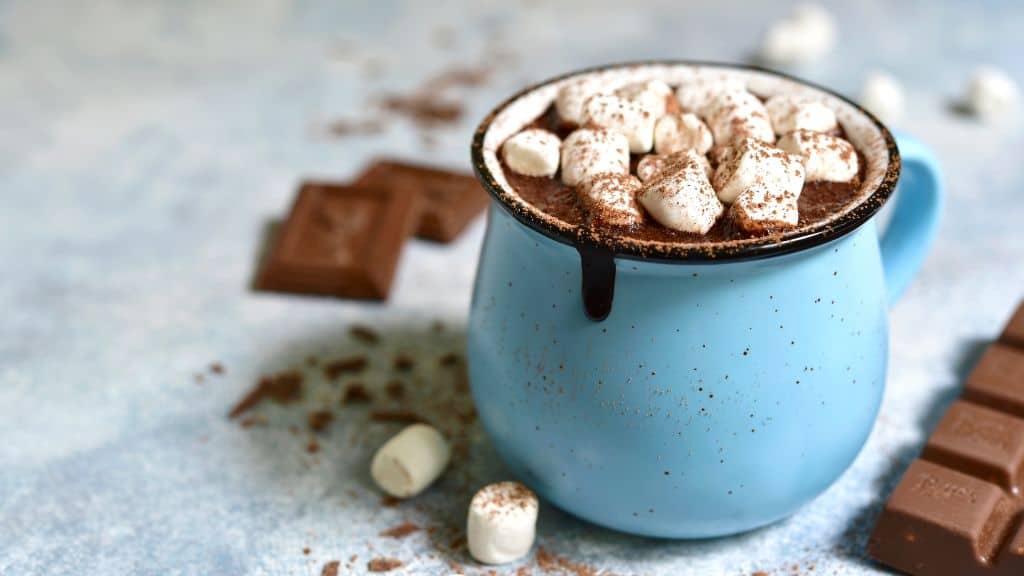
Hot chocolate is more than just a cozy drink; it’s a world full of surprises, especially when it comes to caffeine. Let’s unwrap some of these chocolatey facts together!
1: The Average Caffeine Content
- A standard cup of hot chocolate contains about 5-15 mg of caffeine. That’s like a gentle pat on the back compared to the strong handshake from a cup of coffee.
2: Chocolate Type Matters
- Dark chocolate ups the ante with more caffeine than milk chocolate. It’s like choosing between a light jog or a sprint in terms of energy.
3: Processing Plays a Part
- The way chocolate is processed can affect its caffeine content. More processing usually means less caffeine, kind of like smoothing out the edges of a spiky ball.
4: Coffee vs. Tea vs. Hot Chocolate
- Compared to the 95 mg in a cup of coffee or the 26 mg in black tea, hot chocolate is the gentle wave in a sea of caffeine highs.
5: Homemade Variability
- Making hot chocolate at home? The caffeine content can swing based on how much cocoa you scoop in. It’s your personal caffeine dial!
6: Extras Add More Than Flavor
- Marshmallows and whipped cream don’t add caffeine, but they can make the drink feel more energizing by boosting your sugar levels. It’s like adding sparkles to your energy bubble.
7: Health Benefits and Considerations
- Caffeine in hot chocolate can improve focus and mood, but it’s important to enjoy it in moderation, especially for those sensitive to caffeine or enjoying their mugful late in the day.
Hot chocolate is a delightful paradox, offering comfort with a hint of caffeine-induced alertness. Whether you’re sipping to relax or for a gentle energy boost, knowing these facts lets you tailor your experience, one cocoa-filled cup at a time.
How to Enjoy Hot Chocolate Mindfully
Savoring hot chocolate is an art and a science. Let’s explore how to enjoy this delightful beverage mindfully, ensuring every sip is just right.
Tips for Reducing Caffeine Content
Want to keep your hot chocolate’s cozy vibe without the caffeine buzz? Here’s how:
- Choose Chocolate Wisely: Opt for chocolate with lower caffeine content. Milk chocolate is your friend here, offering sweetness with a softer caffeine touch.
- Adjust the Cocoa: Play with the amount of cocoa powder. Less cocoa means less caffeine, allowing you to customize your cup to your liking.
- Look for decaffeinated cocoa products.
When to Enjoy Hot Chocolate
Timing is everything, especially when it comes to indulging in your hot chocolate ritual:
- Morning or Early Afternoon: Enjoy your hot chocolate early to avoid any interference with your sleep. Think of it as a morning hug or an after-lunch treat.
- Pre-Evening Relaxation: A cup of low-caffeine hot chocolate can be the perfect prelude to your evening unwind. Just be sure to keep it early enough so as not to disturb your zzz’s.
Caffeine can affect sleep even in small doses for sensitive individuals (Clark & Landolt, 2017).
Conclusion
So, does hot chocolate have caffeine? Yes—but in gentle, manageable amounts.
We’ve journeyed through the warm, inviting world of hot chocolate, uncovering its caffeine secrets and learning how to enjoy it in the best ways possible. From understanding its caffeine content to choosing the right time to indulge, hot chocolate remains a versatile and beloved drink.
Remember, the key to a perfect hot chocolate experience lies in moderation and customization. Whether you prefer a dark chocolate kick or a gentle milk chocolate embrace, there’s a hot chocolate out there for everyone. So, go ahead, explore different types and find your perfect match. Here’s to many more cozy, comforting cups of hot chocolate, crafted just the way you like them!


Frequently Asked Questions About Caffeine in Hot Chocolate
-
Does hot chocolate contain a significant amount of caffeine?
Hot chocolate does indeed contain caffeine, but in relatively modest amounts. A typical 8-ounce (240-millilitre) serving of hot chocolate has between 5 and 15 milligrams of caffeine. This quantity can vary based on the specific type and brand of cocoa or chocolate used, as well as the serving size.
Compared to coffee and tea, hot chocolate’s caffeine content is significantly lower, making it a cozy option for those seeking a warm beverage with less caffeine. -
Can consuming hot chocolate affect your sleep?
Indeed, indulging in hot chocolate or chocolate can impact your sleep, particularly if consumed in large amounts or during the evening. Cocoa, the key ingredient in chocolate, contains caffeine, a stimulant known to enhance brain function and alertness, potentially making it challenging to fall asleep.
To ensure a good night’s rest, it’s advisable to moderate your cocoa consumption and avoid it close to bedtime, allowing you to enjoy its comforting warmth without compromising your sleep quality. -
Is it possible to enjoy hot chocolate without caffeine?
Yes, you can relish the warmth and comfort of hot chocolate without the caffeine buzz.
Decaffeinated hot chocolate is a delightful option for those who wish to avoid caffeine. It offers the same rich and indulgent experience as traditional hot chocolate but without the stimulating effects of caffeine. This makes it an excellent choice for any time of the day, especially in the evening, or for those sensitive to caffeine, including children.
With decaffeinated hot chocolate, you can enjoy the cozy comfort of this beloved beverage, ensuring a relaxing experience without compromising your sleep or causing jitters.
References:
Clark, I., & Landolt, H. P. (2017). Coffee, caffeine, and sleep: A systematic review of epidemiological studies and randomized controlled trials. Sleep Medicine Reviews, 31, 70–78. https://doi.org/10.1016/j.smrv.2016.01.006
Juliano, L. M., & Griffiths, R. R. (2004). A critical review of caffeine withdrawal: Empirical validation of symptoms and signs. Psychopharmacology, 176(1), 1–29. https://doi.org/10.1007/s00213-004-2000-x
Smit, H. J. (2011). Theobromine and the pharmacology of cocoa. Handbook of Experimental Pharmacology, 200, 201–234. https://doi.org/10.1007/978-3-642-13443-2_7