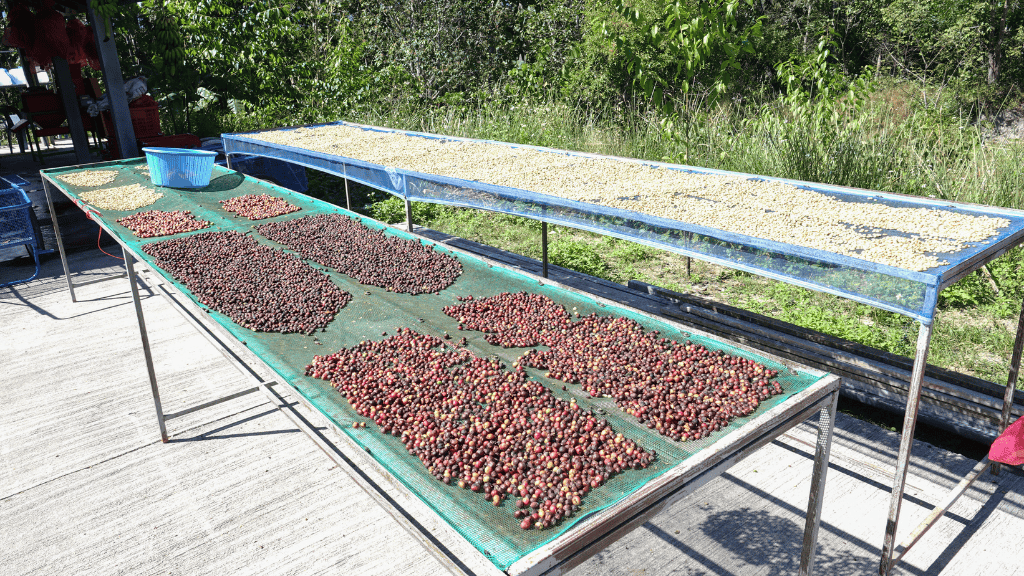
Washed vs natural coffee process can feel confusing when you just want beans that taste good at home. The label sounds technical, but the idea is simple: it tells you how the coffee cherry was handled before roasting, and that can shape what you taste in the cup.
Key takeaways
- Washed coffee often tastes cleaner and more defined. Natural coffee often tastes fruitier and fuller.
- The process matters, but it is not the only thing that shapes flavor. Origin, variety, roast level, grind, and brew method matter too.
- If you want more consistent home brews with less guesswork, start by matching the process to your brew method and taste goal.
If coffee labels leave you overwhelmed, you are not alone. This guide will help you understand the difference, choose beans with more confidence, and brew with less waste.
Quick answer
Washed coffee is made by removing the fruit from the coffee seed before drying. Natural coffee is dried with the whole fruit still around the seed. Washed coffees often taste cleaner and brighter. Natural coffees often taste fruitier, sweeter-feeling, and heavier-bodied.
For home brewing, a safe starting point for hot methods like pour-over is 1:13 to 1:16 coffee-to-water, 93 ± 3°C water, and about 2 to 4 minutes of contact time. For French press, a common range is 1:10 to 1:16, 93 ± 3°C, and about 4 minutes.
Need a Few Simple Tools for Better Home Brewing?
Browse practical Amazon Basics coffee and kitchen gear for grinding, brewing, storing, and setting up your everyday coffee corner.
Paid link. As an Amazon Associate we earn from qualifying purchases.
Results change based on:
- bean origin
- roast level
- grind size
- water temperature
- brew method
- your equipment


What “washed” and “natural” mean
Coffee beans are seeds inside a fruit called a coffee cherry (the fruit around the seed). Before roasting, producers must remove that fruit and dry the seed to a stable state. Different processing methods do that in different ways.
What is washed coffee?
Washed process means the fruit is removed before the coffee dries. The pulp is taken off, and the beans dry with the parchment layer still on them. This method is also called the wet method. Coffees from this process often show a cleaner cup and more distinct flavor notes.
What is natural coffee?
Natural process means the whole coffee cherry dries first, with the fruit still around the seed. After drying, the outer layers are removed. This is also called the dry method. Coffees from this process often taste fruitier and fuller-bodied.
Washed vs natural coffee process at a glance
| Factor | Washed coffee | Natural coffee |
| How it is processed | Fruit removed before drying | Whole cherry dries before the seed is removed |
| Common taste tendency | Cleaner, more defined, often brighter | Fruitier, sweeter-feeling, often heavier |
| Body (how heavy the coffee feels in the mouth) | Light to medium | Medium to heavy |
| Clarity (how easy it is to notice separate notes) | Often higher | Often lower |
| Beginner-friendliness | Often easier to read in the cup | Can be trickier if brew settings are off |
| Water use at processing stage | Often higher than dry methods | Often lower than wet methods at processing stage, though sustainability still depends on more than water alone |
How the process can affect flavor
The process changes what happens to the seed before roasting. During processing, compounds linked to aroma, acidity, sweetness, and body may develop differently. Review research describes processing as one factor that can influence volatile compounds, organic acids, and sensory quality.
That said, process does not work alone. A washed Ethiopian coffee and a washed Colombian coffee can still taste very different. Roast level also changes the cup a lot. NCA notes that roast style and brewing choices both shape flavor, and review papers on coffee flavor show that origin, variety, maturity, roasting, and extraction all matter.
A practical way to think about it:
- Washed often highlights clarity, structure, and note separation.
- Natural often brings more fruit, more body, and a bigger overall impression.
- Neither is always better.
- The right choice depends on what you enjoy and how you brew.
Which one should you choose?
Choose washed coffee if you want:
- cleaner flavor
- easier note separation
- a more tea-like or crisp cup
- a simpler starting point for pour-over
Choose natural coffee if you want:
- bigger fruit notes
- more body
- a sweeter-feeling cup
- a coffee that stands out in milk drinks or fuller brews
By brew method
Pour-over
Washed coffees are often the easiest place to start for pour-over because this method makes differences in clarity easier to notice. NCA’s pour-over guidance also supports controlled brewing: 1:13 to 1:16 ratio, 93 ± 3°C, and 2 to 4 minutes.
Natural coffees can also work very well in pour-over, but they often need more careful dialing in. A slightly coarser grind or slightly lower temperature may help if the cup tastes harsh.
AeroPress
AeroPress is flexible, so both processes can work well. Washed coffees often give a cleaner cup. Natural coffees often give a richer, more fruit-forward cup. Start simple and change one thing at a time.
French press
French press tends to highlight body because the coffee stays in contact with water longer and uses a metal filter. NCA’s base range is 1:10 to 1:16, 93 ± 3°C, and about 4 minutes. That fuller style can suit natural coffees very well, though washed coffees can still taste excellent if you want a cleaner finish.
Espresso
Espresso is a concentrated brew. Small changes show up fast in the cup. Washed coffees may come across as cleaner and sharper. Natural coffees may come across as sweeter-feeling and heavier. Roast level matters a lot here, and NCA notes that “espresso roast” is not one fixed roast level.
Moka pot
Moka pot already brews a bold cup. Natural coffees can feel rich and intense in this method. Washed coffees may taste more focused and less jammy.
Cold brew
Cold brew uses a long steep at cool temperature. NCA’s general range is 1:4 to 1:5 coffee-to-water and about 12 hours of contact time. Since lower-temperature, longer brewing may reduce perceived acidity, cold brew can soften sharper edges and make body stand out more. Natural coffees can feel round and sweet here, while washed coffees can still taste smooth and clean.
Beginner-safe brewing process
This is a simple method for comparing washed and natural beans at home.
What you need
- 15 g coffee
- 225 g to 240 g water
- dripper or AeroPress
- grinder
- timer
- kettle
- mug
This gives you about a 1:15 to 1:16 ratio, which is a safe range for many hot brews.
Steps
- Use the same roast level if you can. Comparing a light washed coffee to a dark natural coffee is less helpful.
- Grind medium for pour-over, or use your usual AeroPress setting.
- Heat water to about 93°C. If you just boiled it, let it rest about 1 minute. NCA uses 93 ± 3°C as a common hot-brew range.
- Bloom the coffee. (Bloom means a short wetting step that releases trapped gas.) Add about twice the coffee weight in water first, so 15 g coffee gets about 30 g water. Wait 30 to 45 seconds.
- Finish the pour slowly until you reach your target water amount.
- Aim for 2 to 4 minutes total brew time for pour-over.
- Taste side by side. Ask: Which cup feels cleaner? Which feels fruitier? Which one would I want every morning?
Fallbacks if you lack tools
No scale
Use about 2 level tablespoons of ground coffee for 6 oz water as a rough start. This is less accurate, so expect more variation.
No thermometer
Bring water to a boil, then let it rest about 1 minute for most hot brews. NCA’s pour-over guide says this is a workable cue.
No grinder
Ask the café or roaster to grind for your brew method:
- pour-over: medium
- French press: coarse
- espresso: fine
- moka pot: medium-fine
Common mistakes
- Assuming washed is always better. Do this instead: choose based on taste goal, not just process.
- Assuming natural means sweet no matter what. Do this instead: check roast level and tasting notes too.
- Changing too many variables at once. Do this instead: keep the same ratio, water, and brew method when comparing beans.
- Brewing natural coffee too hot right away. Do this instead: start around the usual range, then lower slightly if the cup tastes harsh.
- Using stale coffee. Do this instead: buy fresher beans and grind close to brew time. NCA says grinding right before brewing helps preserve freshness.
- Buying by process alone. Do this instead: also check origin, roast, and whether the roaster gives clear tasting notes.
- Using the wrong grind for the method. Do this instead: match grind to brewer before judging the bean.
- Expecting one “correct” answer. Do this instead: treat process as a clue, not a guarantee.
If your coffee tastes…
Bitter
Likely causes:
- grind too fine
- water too hot
- brew time too long
- dark roast pushing the cup too far
Fixes:
- grind a bit coarser
- let boiled water rest longer
- shorten brew time
- compare with a lighter roast if possible
Sour
Likely causes:
- grind too coarse
- water too cool
- under-extraction (not enough flavor pulled from coffee)
- brew too short
Fixes:
- grind finer
- use hotter water within the safe range
- pour more evenly
- extend contact time slightly
Weak or watery
Likely causes:
- too little coffee
- grind too coarse
- channeling in pour-over (water ran unevenly through the bed)
Fixes:
- tighten the ratio
- grind a little finer
- pour more steadily
- use a timer and scale if possible
Harsh or astringent
(Astringent means a dry, rough mouthfeel.)
Likely causes:
- over-extraction
- very hot water
- too much agitation
- a natural coffee brewed too aggressively for its roast and grinder setup
Fixes:
- lower water temperature a little
- grind slightly coarser
- stir less
- reduce total brew time
Sustainability note
It is tempting to say natural coffee is simply “more sustainable,” but that is too broad. Wet processing often uses more water than dry processing, and FAO guidance discusses water use and wastewater handling as real concerns in wet processing systems. At the same time, sustainability also depends on drying control, local climate, waste handling, land use, and farm practices.
A fair takeaway is this:
- Natural processing may use less water at the processing stage.
- Washed processing may offer quality and consistency benefits in some settings.
- The full sustainability picture depends on more than the label.


Gear that can help
If you want more clarity in washed coffees
- a burr grinder for more even grind size
- a gooseneck kettle for steadier pours
- a scale for better repeatability
If you enjoy natural coffees
- a burr grinder to avoid extra fines
- a scale to manage stronger recipes
- paper filters if you want to reduce some heaviness in the cup
If you brew in a small kitchen
- a compact hand grinder
- a simple dripper
- one digital scale that works for coffee and cooking
How we know
- We used the National Coffee Association’s process pages for the basic definitions of washed and natural coffee.
- We used NCA brew guides for hot-brew and cold-brew parameter ranges such as ratio, temperature, and time.
- We checked review literature showing that processing can affect sensory outcomes and chemistry, but does not act alone.
- We used cautious language for taste because origin, roast, variety, and brewing method also shape the final cup.
- We used FAO material for the water-use and processing-context section.
Final thoughts on washed vs natural coffee process
Washed vs natural coffee process is not just farm trivia. It is a practical clue that helps you predict what may end up in your cup. If you want cleaner, more defined coffee, start with washed. If you want fruit, body, and a bigger flavor profile, try natural. Then brew both with the same setup and let your taste decide.
References
Febrianto, N. A., & Zhu, F. (2023). Coffee bean processing: Emerging methods and their effects on chemical, biological and sensory properties. Food Chemistry, 424, 135489.https://doi.org/10.1016/j.foodchem.2023.135489
Food and Agriculture Organization of the United Nations. (n.d.). Chapter 6: Harvesting and processing.https://www.fao.org/4/ae939e/ae939e08.htm
Food and Agriculture Organization of the United Nations. (n.d.). Guidelines for the prevention of mould formation in coffee.https://www.fao.org/fileadmin/user_upload/agns/pdf/coffee/guidelines_final_en.pdf
National Coffee Association USA. (2026). Cold brew coffee.https://www.aboutcoffee.org/brewing/cold-brew-coffee/
National Coffee Association USA. (2026). French press coffee.https://www.aboutcoffee.org/brewing/french-press-coffee/
National Coffee Association USA. (2026). Pour-over coffee.https://www.aboutcoffee.org/brewing/pour-over-coffee/
National Coffee Association USA. (2026). Processes.https://www.aboutcoffee.org/beans/processes/
National Coffee Association USA. (2026). Roasts.https://www.aboutcoffee.org/beans/roasts/
National Coffee Association USA. (2026). Storage and shelf life.https://www.aboutcoffee.org/beans/storage-and-shelf-life/
National Coffee Association USA. (2026). What is coffee?https://www.aboutcoffee.org/origins/what-is-coffee/
Osorio Pérez, V., Herrera, J. C., Salinas, M. P., Flórez, D. A., Restrepo, J. D., Oliveros, C. E., & Sanz, C. (2023). Chemical composition and sensory quality of coffee cherries according to harvest date and degree of maturation. Agronomy, 13(2), 341. https://doi.org/10.3390/agronomy13020341