Key Takeaways:
- Start with the biggest wins: Try cold brew (often gentler), then choose medium-dark/dark roasts and paper filters to reduce sharpness and harshness.
- Shop smarter, faster: Pick beans with chocolate/nut/caramel notes, skip “citrus/sparkling/bright,” and favor bags with roast date + origin + processing info for consistency.
- “Low acid” isn’t a reflux guarantee: pH isn’t the whole story—titratable acidity and personal triggers matter, so test brew method, strength, and timing (with food) if symptoms persist.
What “low acid coffee” actually means (and what it does not)
When people say “low acid coffee,” they usually mean, “Coffee that feels gentler on my stomach.” That is a real goal. But the word acid gets used in two different ways, and that is where the confusion starts.
Two different ideas get mixed up all the time. One is acidity as chemistry, and the other is acidity as flavor. Those two are related, but they are not the same thing. (Batali et al., 2021; Yeager et al., 2023).
Two different ideas get mixed up
1) Acidity as chemistry (lab stuff)
This is what instruments measure.
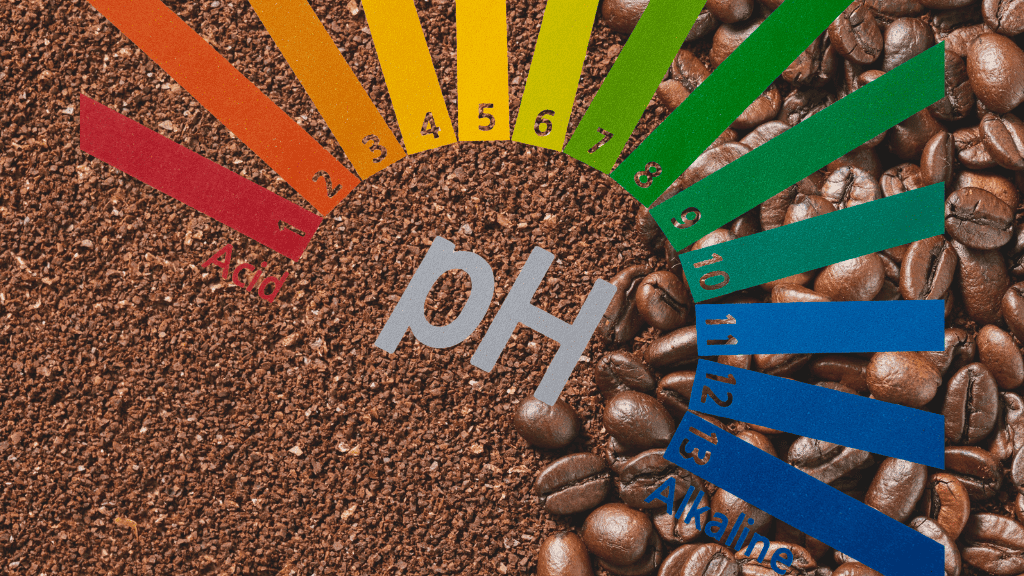
- pH tells you how acidic a liquid is on a scale, lower number means more acidic.
- Titratable acidity (TA) is how much total acid is in the cup, measured by how much base it takes to neutralize it. TA often matches “how sour it feels” better than pH alone (Rao & Fuller, 2018; Rune et al., 2023).
2) Acidity as flavor (taste stuff)
This is what your mouth notices.
Need a Few Simple Tools for Better Home Brewing?
Browse practical Amazon Basics coffee and kitchen gear for grinding, brewing, storing, and setting up your everyday coffee corner.
Paid link. As an Amazon Associate we earn from qualifying purchases.
- It is the bright, fruity “spark” that can taste like citrus, green apple, or berries.
- A coffee can taste bright without having a wildly different pH, because flavor and chemistry do not always line up neatly. TA is often the better clue for perceived sourness (Rao & Fuller, 2018; Batali et al., 2021).
Typical coffee pH (real-world range)
Most brewed coffees sit around pH 4.85 to 5.10 in real testing, depending on the beans and brew method (Rao & Fuller, 2018; Healthline, 2019).
So yes, coffee is “acidic,” but it is not battery-acid level. It is more like the tart zone, not the danger zone.
The key takeaway for sensitive stomachs
Here is the part people hate hearing, but it helps. “Low acid” on a bag does not guarantee “no reflux.”
Coffee can bother reflux because it can act like a trigger in other ways, like relaxing the lower esophageal sphincter (the valve that helps keep stomach acid down).
That is why two people can drink the same coffee and have totally different results (Cohen & Booth, 1975; Kim et al., 2014; Iriondo-DeHond et al., 2020; Cleveland Clinic, n.d.; Mehta et al., 2020).


Who usually searches for low acid coffee (and what they need)
If you are here, you probably fall into one of these groups. I have been there too, staring at a bag that says “smooth” and hoping it means “safe.”
People who often search this
- Reflux, GERD, or heartburn triggers
- “Coffee gives me heartburn.”
- “I feel burning after my first cup.”
- “I love coffee, but it hates me.”
- Stomach discomfort
- Nausea, cramps, or a sour stomach after coffee, especially on an empty stomach (Cleveland Clinic, n.d.; Mehta et al., 2020).
- Taste sensitivity
- You want coffee that feels smooth, not sharp, bitter, or drying (Yeager et al., 2023; Rune et al., 2023).
- You want coffee that feels smooth, not sharp, bitter, or drying (Yeager et al., 2023; Rune et al., 2023).
What you should get by the end of this guide
I’m not going to leave you with vague tips like “try something else.” We want a real plan.
- A clear buying checklist
- What to look for on a bag, and what words are just marketing fluff.
- Brewing choices that cut harshness
- Simple method swaps that many people feel right away.
- A troubleshooting path
- What to change first, what to change second, and when coffee might not be the main problem.
The 12 practical levers that can make coffee feel “lower acid”
Let’s make this simple and useful. We’ll start with the changes that tend to help the most, then move into fine-tuning.
Below are the first 6 levers (the “big hitters”). Each one includes what to try first, plus quick pros and cons.
1) Choose brew style: start with cold brew if your goal is “gentler”
Cold brew often feels smoother because it usually has lower titratable acidity than hot brew in lab tests (Rao & Fuller, 2018; Kyroglou et al., 2022).
If your stomach gets angry fast, this is the first lever I would test.
What to try first (easy cold brew baseline)
- Grind: coarse, like rough sea salt
- Time: 12–18 hours at room temp or fridge
- Strain: fine mesh + paper filter if you want it extra clean
- Dilute: start with 1:1 concentrate to water, then adjust to taste
Pros
- Often tastes less sharp and less “bitey.”
- Easy to batch for 2–3 days.
Cons
- Takes planning (you do not get coffee “right now”).
- Can turn muddy if you use too fine a grind.
Expert tip
- If cold brew still feels strong, dilute more before you blame the beans.
Strong coffee can feel harsh even when the acids are lower.
Example
- If you steep 100 g coffee + 700 g water, then dilute the final drink with water until it tastes like a normal iced coffee.
2) Prefer medium-dark to dark roasts if you want fewer chlorogenic acids
Roasting tends to reduce chlorogenic acids (CGAs) as roast level goes darker (Awwad et al., 2021; Tsai et al., 2021; Pilipczuk et al., 2014).
CGAs are not the only acids in coffee, but they are a big piece of the puzzle.
What to try first
- If you drink light roast now, move one step darker first.
- Try medium-dark before going very dark.
Pros
- Often tastes more chocolatey and less “sparkly.”
- Many people find it easier on the stomach.
Cons
- Too dark can taste smoky or “burnt toast.”
- Some dark roasts feel bitter even if they taste less bright.
- You may lose fruity sweetness (Yeager et al., 2023).
Expert tip
- Look for “medium-dark” or “full city” style roasts if the roaster uses those terms.
It’s a nice middle ground for many people.
Example
- If you love light roast but it hurts, try a medium-dark Colombian with notes like cocoa, nuts, caramel.
3) Watch the “dark roast” tradeoff: lower brightness, different acids
Here’s the twist. Some acids break down with roasting, but quinic acid can increase as CGAs degrade (Anokye-Bempah et al., 2024).
This is one reason dark roast can taste more bitter, even when some “acidity” measures change and even if the coffee does not feel “bright.” (Yeager et al., 2023).
What to try first
- Keep the roast dark, but brew it cleaner (paper filter helps a lot).
Pros
- Less fruity “zing,” more classic deep flavors.
- Often feels smoother for people who hate bright coffee.
Cons
- Can taste more bitter if the roast is very dark.
- Easy to over-extract and get that “burnt edge.”
Expert tip
- If your dark roast tastes bitter, grind coarser before you lower the dose.
Coarser grind often fixes bitterness fast.
Example
- Same beans, two brews:
- French press: heavier, sometimes harsher
- Paper drip: cleaner, often easier to drink
4) Pick origins and flavor profiles that tend to taste less sharp
This is not a strict rule. But in the real world, coffees that read as “low acid” to people often have chocolate, caramel, and nut notes instead of citrus-floral notes (Rune et al., 2023; Yeager et al., 2023).
What to try first (shopping cues)
- Choose these words: chocolate, caramel, nuts, brown sugar, smooth, mellow
- Be cautious with these words: lemon, grapefruit, sparkling, juicy, bright
Pros
- You can often find a “gentler” cup without changing your brew gear.
- Easier to enjoy black if you like simple flavors.
Cons
- You might miss the fun fruity notes if you love bright coffee.
- Labels are not perfect, so you still need to test.
Expert tip
- If a bag lists “red fruit, citrus, floral”, it is often a risky pick for sensitive drinkers.
I save those for days when my stomach is behaving.
Example
- Safer starter picks:
- Brazil natural with cocoa, peanut, caramel
- Sumatra with earthy, dark chocolate, spice
5) Use paper filtration when possible (it is a clean, easy variable)
Paper filters tend to give a cleaner cup. That can feel less “heavy” and less aggressive for many of us (Rune et al., 2023)..
What to try first
- Brew the same coffee two ways:
- Paper drip or pour-over (paper filter)
- French press (metal filter)
Pros
- Cleaner body, less oil in the cup.
- Easy test without buying new beans.
Cons
- Less “thick” mouthfeel if you love rich, heavy coffee.
- Paper filters cost a bit over time.
Expert tip
- If you use paper filters, rinse the filter first.
It reduces papery taste and makes the cup cleaner.
Extra note
- Paper filtering also reduces coffee diterpenes compared with unfiltered methods, which matters for some health goals.
6) Lower extraction stress: avoid very hot water and over-long contact (hot coffee)
Hot brewing can pull out more acids and other compounds compared with cold brewing.
If you are sensitive, “too hot and too long” can be a rough combo (Rao & Fuller, 2018; Yeager et al., 2023).
What to try first (hot brew gentle settings)
- Water temp: start around 90–94°C (194–201°F)
- Avoid: pouring fully boiling water straight onto grounds if you often feel heartburn
- Time guardrails:
- Pour-over: aim for 2.5–4 minutes
- French press: start at 4 minutes, do not let it sit forever
Pros
- Often reduces harshness fast, with no new beans needed.
- Helps both “sharp sour” and “dry bitter” cups.
Cons
- Too cool can make coffee taste weak or sour.
- Requires a thermometer or temp-control kettle for best repeatability.
Expert tip
- If your coffee tastes harsh, change only one thing at a time.
Start with lower temp, then adjust grind next.
Example
- If you normally use boiling water, try 94°C for a week.
Many people notice the cup feels calmer.
7) Grind coarser (or shorten brew time) to avoid harsh extraction
When coffee tastes harsh, it is often an extraction problem, not a bean problem. Grind size and brew time change what gets pulled into your cup.
What to try first
- If your coffee tastes bitter, dry, or rough:
- Go one step coarser on your grinder.
- Or shorten contact time (stir less, steep less, brew faster).
- If you do cold brew:
- Keep grind medium-coarse to coarse, and stay in a steady time window like 14–22 hours.
Pros
- Fast fix with no new gear.
- Often makes coffee taste smoother right away.
Cons
- Too coarse can taste weak or watery.
- Too short can taste sour and “thin.”
Expert tip
- Change one thing at a time.
If you change grind, ratio, and time together, you won’t know what helped.
Example
- Your pour-over tastes sharp and bitter.
Tomorrow, grind one click coarser and keep everything else the same.
8) Keep coffee strength moderate while you test
A stronger cup can feel more aggressive, even when the beans are “low acid.” Strength is often tracked as TDS (total dissolved solids), and higher strength can come with more bitterness and sourness in sensory testing (Batali et al., 2021; Yeager et al., 2023)..
What to try first (simple ratios)
- Use a “middle-of-the-road” brew ratio:
- Start around 1:18 (example: 20 g coffee to 360 g water).
- If you like it stronger, move slowly:
- Try 1:17, not a jump to 1:14.
Pros
- Easier to spot what triggers you.
- Often reduces “punch” without changing beans.
Cons
- If you go too weak, coffee can taste flat.
- Milk drinks may need a slightly stronger base.
Expert tip
- If you have reflux, don’t “prove a point” with a huge mug.
Start with a smaller cup and a balanced ratio first.
Example
- You normally brew 30 g to 400 g water (very strong).
Try 24 g to 400 g for a week and see how you feel.
9) Consider decaf if caffeine is part of your trigger
For some of us, the problem is not just the acid in the cup. Coffee and caffeine can affect reflux symptoms in some people, but research results are mixed (Yeager et al., 2023).
What to try first
- Do a simple test:
- Drink your usual coffee one day.
- Drink decaf the next day, same brew method.
- Look for common decaf processes:
- Swiss Water Process (uses water, time, and temperature).
- CO₂ decaf (uses pressurized carbon dioxide to pull caffeine out).
Pros
- Lets you keep the ritual without the caffeine hit.
- Great “A/B test” if symptoms are unpredictable.
Cons
- Some decafs taste flatter if they’re low quality.
- You still need to watch brew strength and roast level.
Expert tip
- Buy decaf from a roaster you already trust.
Decaf quality varies a lot.
Example
- If morning coffee hurts but afternoon coffee is fine, try decaf in the morning first.
10) Add milk (or protein) if it agrees with you
I’ve seen this help two ways. It can soften taste, and it can change the drink’s measured acidity in lab tests (milk-added coffee can show a higher pH).
What to try first
- Add a small splash of milk or a milk alternative you tolerate.
- If reflux is your issue, try coffee with food, not on an empty stomach.
Pros
- Often makes coffee taste smoother and less sharp.
- Can feel gentler for people who hate black coffee.
Cons
- Dairy can trigger some people (lactose or fat sensitivity).
- Sweet creamers can make things worse for some stomachs.
Expert tip
- If you try milk, start with low-fat and a small amount.
Then adjust slowly.
Example
- You tolerate coffee in a latte but not black drip.
That is a clue that dilution and food timing may matter more than “low acid beans.”
11) Be skeptical of “low acid” labels and demand specifics
“Low acid” is not a regulated promise in most places. Some brands mean “dark roast,” some mean “smooth taste,” and some mean nothing at all.
Marketing claims vary. Practical consistency signals often include roast date, clear origin, and processing transparency. Better transparency can mean fewer surprises cup to cup. (Pilipczuk et al., 2014).
What to look for (good signs)
- Roast level clearly stated (medium-dark or dark, if that’s your goal).
- Taste notes that match “smooth” (chocolate, nuts, caramel).
- A roast date and real origin info.
Red flags (marketing fog)
- Big claims like “70% less acid” with no method shown.
- No roast level, no origin, no details.
Expert tip
- If a brand is truly proud of “low acid,” they usually explain how they got there.
Vague bags are harder to trust.
Example
- Two bags say “low acid.”
Pick the one that also tells you roast level, origin, and tasting notes.
12) If symptoms persist, treat this as trigger management, not a pH puzzle
This is the lever that saves people the most time. Coffee can be linked to GER symptoms in some large studies, but other studies find no clear association, so personal triggers matter a lot (Cleveland Clinic, n.d.; Mehta et al., 2020).
What to try first (simple troubleshooting path)
- Timing: drink coffee after food, not on an empty stomach.
- Dose: cut your serving size in half for a week.
- Swap test: replace one coffee with water for a few days and track symptoms (one cohort found swapping away from coffee reduced GER symptoms risk).
Pros
- Helps even if “low acid coffee” does not.
- Gives you clear data about your own body.
Cons
- Takes a few days of consistency.
- Can feel annoying if you want a one-bag solution.
Expert tip
- Keep a tiny note for 7 days: time, brew method, size, and how you felt.
Patterns show up fast when we write them down.
Example
- If coffee hurts only on busy mornings, your real trigger might be empty stomach + stress + strong coffee.
Fix the timing and strength before you blame every bean.


Buying checklist: how to choose low acid coffee beans (fast, in a store)
When I shop for “low acid coffee,” I don’t overthink it. I scan the bag like a detective, then I pick the safest bet. You can do this in under one minute.
1) Start with roast level
- Best starting point: medium-dark to dark (Awwad et al., 2021)
- Why it helps: roasting usually reduces chlorogenic acids (CGAs), which are a big group of acids in coffee.
- Quick rule: if you drink light roast now, go one step darker first.
Fast bag cues
- Look for words like: medium-dark, dark, full city, espresso roast (often medium-dark).
2) Use flavor notes as your shortcut
If the bag sounds like fruit juice, it will probably taste sharp. If it sounds like dessert, it often tastes smoother.
- Safer notes: chocolate, cocoa, caramel, nuts, brown sugar, smooth, mellow
- Riskier notes (for sensitive drinkers): lemon, grapefruit, citrus, sparkling, bright, floral
Example
- Choose: “chocolate, hazelnut, caramel”
- Skip (for now): “lemon zest, jasmine, juicy acidity”
3) Match the beans to your brew method
This matters more than most people think. A “gentle” bean can still feel rough if you brew it the wrong way.
- If you want cold brew: look for “cold brew friendly,” “smooth,” or “chocolate-forward.”
- If you want hot drip: pick a “balanced” profile, not “bright.”
4) Trust transparency, not hype
I trust bags that show their work. Details usually mean the roaster cares about consistency.
- Green flags
- Roast date
- Origin (country, region, sometimes farm)
- Processing info (washed, natural, honey, decaf method)
- Red flags
- “Low acid” with no other details
- Big claims with no explanation
5) My quick “store decision” script
If you want a simple path, use this.
- Pick medium-dark.
- Choose chocolate/nut/caramel notes.
- Buy the bag with the freshest roast date.
- Brew it with the gentlest playbook below.
Brewing playbooks (choose one)
You don’t need fancy gear. You just need a calm baseline you can repeat. Then you tweak one thing at a time.
Cold brew “gentle” baseline
Cold brew often shows lower titratable acidity than hot brew in lab testing, even when pH is similar.
That’s why many people say it tastes smoother.
What to do (easy, repeatable)
- Grind: coarse, like rough sea salt (Rao & Fuller, 2018)
- Ratio: start at 1:8 (example: 100 g coffee + 800 g water)
- Steep: 12–18 hours
- Strain: mesh strainer, then paper filter if you want it extra clean
- Dilute: start with 1:1 (cold brew + water), then adjust
Pros
- Smooth and low “bite” for many people.
- Easy to batch for a few days.
Cons
- Takes time.
- Can taste muddy if you grind too fine.
Expert tips
- If it still feels harsh, dilute more before you change beans.
- If it tastes flat, steep a little longer, not hotter.
Hot brew “gentle” baseline (paper-filter)
Hot coffee can pull more compounds fast, so control matters. I like paper filters here because the cup feels clean and easy to read.
What to do (simple filter coffee)
- Grind: medium (like sand)
- Water temp: aim for 90–96°C (195–205°F)
- Ratio: 1:16 to 1:18 (example: 20 g coffee + 320–360 g water)
- Brew time target: 2.5–4 minutes
Pros
- Clean taste, fewer “heavy” oils.
- Easier to avoid bitterness when you keep time and temp steady.
Cons
- If you brew too cool or too fast, it can taste sour.
- You need a kettle and a basic timer for best results.
Expert tips
- If you don’t have a thermometer, boil water, then wait about 30–60 seconds.
- If it tastes bitter, grind one step coarser before lowering your dose.
Espresso and “stomach feel” (quick reality check)
Espresso is small but concentrated. Some people tolerate it better because it’s a few sips, and some feel worse because it’s intense.
Use espresso as a personal test
- Try a single shot after food.
- Compare it to your usual mug of drip.
- Keep everything else the same that day.
Pros
- Small serving, quick drink.
- Easy to control with milk drinks.
Cons
- Concentrated flavor can feel harsh.
- Results vary a lot from person to person.
My honest take
Treat espresso like a “maybe.” It’s not a guaranteed low-acid solution, but it can be a useful experiment.


Frequently Asked Questions
Is low acid coffee the same as decaf?
No. Low acid talks about the acids in the cup, while decaf means most caffeine was removed.
Decaf can still act like coffee in your stomach. In one classic study, regular and decaf coffee both stimulated stomach acid more than caffeine alone (Cohen & Booth, 1975).
Try this
If caffeine triggers you (jitters, racing heart, reflux), test decaf for 3–5 days. Some studies show decaf may have less effect on the lower esophageal sphincter (LES) than regular coffee.
If sour taste is your problem, focus on roast + brew method, not decaf.
Is cold brew always less acidic?
It depends on what you mean by “acidic.” In lab work, cold brew tends to have lower titratable acidity (total acids) than hot brew, but pH can be similar (Rao & Fuller, 2018).
That’s why cold brew often tastes smoother, even if the pH number does not drop a lot.
Try this
If you buy bottled cold brew, check if it is concentrate.
If it is concentrate, dilute 1:1 with water first, then adjust.
Do dark roasts always have less acid?
Not always, but they often have less chlorogenic acids (CGAs) because roasting breaks many of them down (Awwad et al., 2021; Rune et al., 2023).
The tradeoff is that roasting also changes the acid “mix,” so a dark roast can taste less bright but still feel bitter.
Pros of going darker
Often less fruity “spark,” more cocoa and nuts.
Many people find it gentler.
Cons
Too dark can taste smoky and bitter.
“Dark roast” labels vary a lot by brand.
Try this
Move one step darker, not three steps darker.
Brew it with a paper filter to keep it clean.
What’s better to watch: pH or titratable acidity?
For taste, titratable acidity (TA) is often more useful. A study on drip coffee found TA relates more strongly to how sour coffee tastes than pH alone (Rao & Fuller, 2018; Batali et al., 2021).
pH is still real, but it is a narrow snapshot. TA is more like the “total sour load” your tongue notices.
Try this (no lab tools needed)
Use taste notes as your shortcut: choose chocolate, caramel, nutty, smooth.
Avoid bags that brag about bright, citrus, sparkling if you are sensitive.
Can coffee cause reflux even if it’s “low acid”?
Yes, it can. Coffee can affect reflux through more than drink acidity, including effects on stomach secretion and LES behavior, and results vary by person.
Research is mixed overall. A meta-analysis found no significant overall association between coffee intake and GERD, but some studies show coffee can increase reflux in people with reflux disease, especially when consumed while fasting (Cohen & Booth, 1975; Kim et al., 2014; Mehta et al., 2020).
Try this
Drink coffee after food, not on an empty stomach.
Use a smaller serving for a week, then scale up slowly.
If symptoms stay strong, treat coffee as a personal trigger and adjust with your clinician.
References:
Anokye-Bempah, L., et al. (2024). The effect of roast profiles on the dynamics of titratable acidity and pH in brewed coffee. Scientific Reports.
Batali, M. E., et al. (2021). Titratable acidity, perceived sourness, and liking of acidity in drip brewed coffee. ACS Food Science & Technology.
Cleveland Clinic. (n.d.). Acid reflux & GERD: Symptoms, what it is, causes, treatment.
Healthline. (2019, November 6). Is coffee acidic?
Iriondo-DeHond, A., Uranga, J. A., Del Castillo, M. D., & Abalo, R. (2020). Effects of coffee and its components on the gastrointestinal tract and the brain–gut axis. Nutrients, 12(1), 88.
Kyroglou, S., et al. (2022). Optimization of sensory properties of cold brew coffee. Beverages (or related journal hosting via PMC).
Mehta, R. S., et al. (2020). Association between beverage intake and incidence of gastroesophageal reflux symptoms. Clinical Gastroenterology and Hepatology.
Pilipczuk, T., et al. (2014). The influence of roasting and additional processing on coffee composition. Food Chemistry / related PMC-hosted review.
Rao, N. Z., & Fuller, M. (2018). Acidity and antioxidant activity of cold brew coffee. Scientific Reports, 8, Article 16030.
Rune, C. J. B., et al. (2023). Acids in brewed coffees: Chemical composition and sensory… Food Chemistry: X / related open-access via PMC.
Tsai, C. F., et al. (2021). The analysis of chlorogenic acid and caffeine content across roast levels. Processes, 9(11), 2040.
Yeager, S. E., et al. (2023). Acids in coffee: A review of sensory measurements and… Critical Reviews in Food Science and Nutrition.